
What if the $300,000 annual investment for a full-time security executive is actually the most significant bottleneck in your 2026 growth strategy? As adversarial AI accelerates the rhythm of the digital battlefield, traditional hiring models often fail to provide the specialized mastery required to counter automated attack vectors. You're likely feeling the strain of translating complex neural network risks into the language of business value for your board of directors. It's a common struggle to maintain regulatory compliance across SEC and GDPR frameworks while your internal teams are stretched thin by the sheer velocity of modern threats. This guide will show you how to master these complexities and select virtual ciso consulting services that bridge the gap between technical vulnerability and executive-level AI strategy. You'll gain a scalable security roadmap and the confidence to defend your organization against sophisticated adversarial AI. We'll examine the critical domains of strategic leadership, from establishing Zero-Trust Architecture to implementing actionable frameworks that secure your enterprise's future at the intersection of AI and cybersecurity.
Key Takeaways
- Understand why 2026 marks a pivotal shift toward strategic AI advisory, moving beyond traditional security models to navigate the evolving digital battlefield.
- Evaluate the significant ROI of fractional leadership by comparing the financial impact of a monthly retainer against a standard $350k C-suite salary.
- Utilize a rigorous executive selection framework to vet virtual ciso consulting services based on the critical intersection of technical depth and business acumen.
- Establish actionable frameworks for board-level reporting that bridge the gap between complex technical vulnerabilities and high-level strategic objectives.
- Discover how Dr. Daniel Glauber’s "Pragmatic Visionary" approach provides the ongoing mastery required to secure your organization’s future in the age of artificial intelligence.
The Evolution of Virtual CISO Consulting Services in 2026
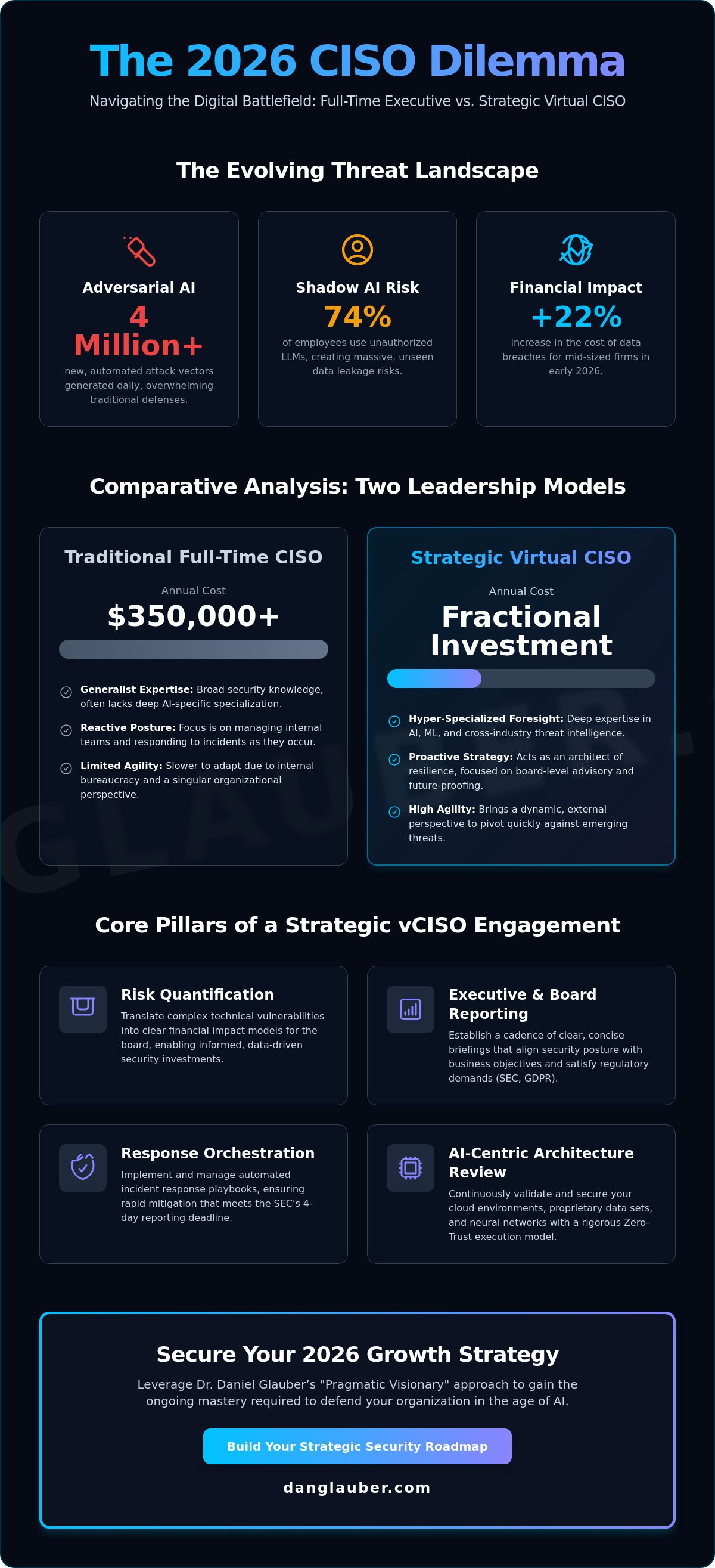
The security landscape of 2026 demands more than checkbox compliance; it requires a fundamental reimagining of leadership. Modern Virtual CISO (vCISO) roles have transcended the outdated "security-as-a-service" model to become strategic AI advisors. Mid-market firms reached a critical tipping point in early 2026 as the cost of automated data breaches for mid-sized companies rose by 22% compared to previous years. Organizations no longer seek a part-time administrator. They require an architect of resilience who can pivot from reactive perimeter defense to proactive, AI-integrated counter-measures. Virtual ciso consulting services act as the bridge between technical complexity and executive mastery.
This evolution reflects a broader shift in how boards perceive risk. Security is no longer a technical silo but a core business enabler. By leveraging virtual ciso consulting services, companies gain access to high-level strategic planning that aligns security investments with revenue goals. This fractional model provides the agility needed to survive a volatile threat environment where a single misconfiguration can lead to catastrophic losses.
The Digital Battlefield: Why Traditional Security Fails
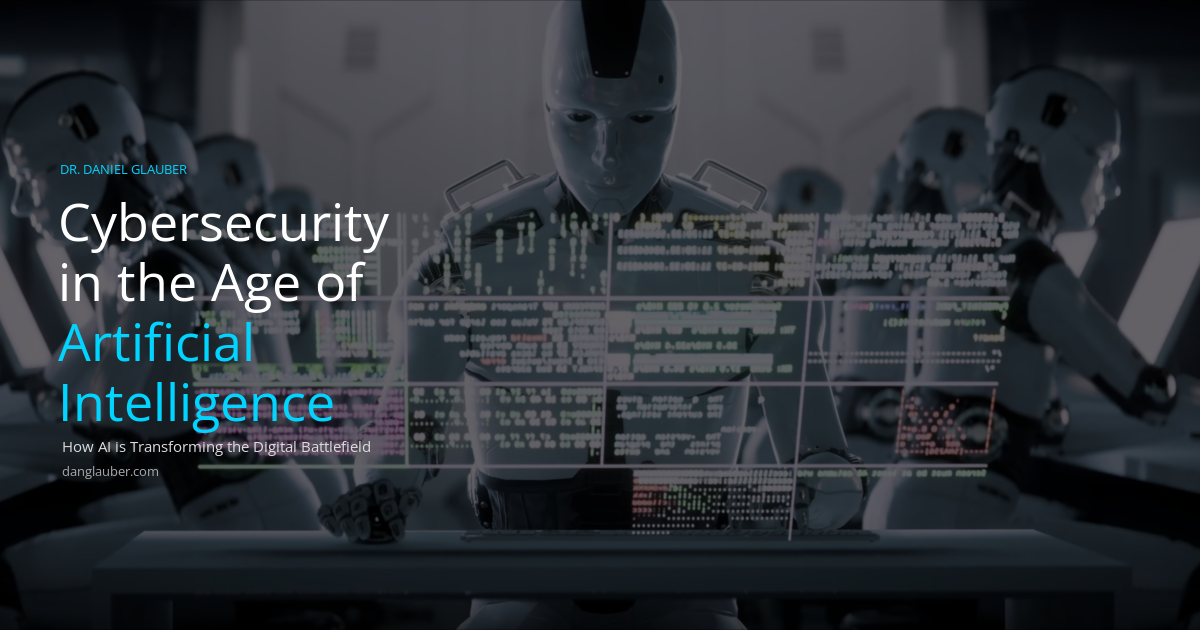
The digital battlefield is no longer operating at human speed. Legacy frameworks built on static perimeters are obsolete because adversarial AI now generates over 4 million new attack vectors daily. A full-time generalist often lacks the hyper-specialized foresight needed to counter these evolving threats in real-time. In contrast, a fractional expert brings a visionary lens sharpened by cross-industry exposure and deep research. This strategic approach is heavily influenced by the frameworks found in Cybersecurity in the Age of Artificial Intelligence, which informs modern vCISO roadmaps by prioritizing adaptive defense over static protection.
The Intersection of AI and Cybersecurity Strategy
Mastery in 2026 involves integrating neural networks directly into defensive postures. This allows for the real-time detection of sophisticated spear-phishing and deepfake social engineering attempts that bypass traditional filters. Modern virtual ciso consulting services must also manage the burgeoning "Shadow AI" crisis within corporate departments. Recent data indicates that 74% of employees use unauthorized LLMs for corporate tasks, creating massive data leakage risks that traditional IT controls can't see. True leadership moves from "Zero-Trust" as a marketing concept to "Zero-Trust" as a rigorous execution model. This involves automated identity verification and granular micro-segmentation across all cloud environments to ensure that every access point is continuously validated.
Core Pillars of a Strategic vCISO Engagement
Success in the digital battlefield requires more than reactive patching; it demands a definitive command of security architecture. High-impact virtual ciso consulting services provide the actionable frameworks necessary to align technical defenses with business objectives. This engagement model focuses on four critical domains: risk quantification, executive reporting, response orchestration, and AI-centric architecture reviews.
Organizations are increasingly Embracing vCISOs to obtain expert-level leadership while maintaining fiscal discipline. A strategic vCISO establishes a monthly cadence for board-level briefings, translating technical telemetry into business risk. This ensures that stakeholders remain informed and aligned on resource allocation. By orchestrating incident response through automated playbooks, firms achieve rapid mitigation without the $200,000 annual overhead of a dedicated internal SOC. Continuous architecture reviews now prioritize the security of neural networks and proprietary data sets, ensuring the infrastructure remains resilient against emerging threats.
Governance and Regulatory Compliance
The 2026 regulatory landscape is defined by the SEC's stringent disclosure requirements. Firms must now report material cyber incidents within four days of determination, a timeline that leaves zero room for administrative friction. A vCISO standardizes compliance across global jurisdictions like GDPR and CCPA, creating a singular, scalable governance framework. This approach proves that rigorous oversight doesn't stifle innovation; it provides the secure foundation required for rapid growth and market confidence.
AI Risk Assessments and Strategy
Strategic virtual ciso consulting services must address the vulnerabilities inherent in machine learning deployments. This involves conducting deep-dive audits of internal AI tools and third-party vendors to identify potential data leakage or adversarial AI threats. Establishing ethical guardrails protects your intellectual property from being ingested into public training models. To master these challenges, consult our guide on AI and Cybersecurity: Navigating the Strategic Frontier. Organizations must bridge the gap between innovation and defense to maintain their competitive edge. Explore our tailored security strategies to begin your transformation and secure your digital future.
Comparative Analysis: vCISO vs. Traditional Security Leadership
The decision between a traditional C-suite hire and virtual ciso consulting services often comes down to the balance of strategic depth and fiscal agility. A full-time Chief Information Security Officer in 2026 typically commands a base salary exceeding $350,000, a figure that doesn't account for equity, bonuses, or the extensive benefits packages required for top-tier talent. Transitioning to a monthly retainer model converts this massive fixed overhead into a scalable operational expense, providing a higher ROI by focusing capital on actionable security outcomes rather than executive administrative costs.
Speed is a decisive factor on the digital battlefield. The average onboarding time for a full-time CISO is 6 months, whereas a vCISO typically reaches full operational capacity in 2 weeks. This rapid integration allows your organization to achieve immediate mastery of the threat landscape. While a traditional hire spends their first quarter navigating corporate politics, a vCISO begins deploying defensive frameworks and identifying critical attack vectors from day one. This agility is vital for firms that can't afford a half-year gap in their leadership structure.
Scalability remains a primary advantage of the virtual model. Organizations don't maintain a static risk profile; they grow, merge, and adopt new technologies like neural networks or Zero-Trust Architecture. Virtual leadership allows you to adjust the depth of advisory based on current needs:
- Growth Phases: Increase advisory hours during mergers or rapid digital transitions.
- Threat Surges: Access specialized expertise during periods of heightened Adversarial AI activity.
- Steady State: Scale back to a maintenance and oversight role to preserve capital.
vCISO vs. Managed Security Service Providers (MSSPs)
It's easy to fall into the "tools-only" trap by assuming an MSSP provides sufficient protection. An MSSP functions as the technician, managing the day-to-day operations of your security stack and SOC. However, you need a strategist to manage those technicians. A vCISO provides the independent oversight necessary for unbiased architecture reviews. They ensure that your security investments aren't just a collection of expensive tools, but a cohesive strategy that supports business objectives.
Strategic Local Leadership in Florida
Regional compliance requires more than just general knowledge; it demands local insight. Engaging vCISO services in Orlando offers firms a strategic advantage in navigating the specific requirements of the Florida Cybersecurity Act. This regional focus provides access to the Orlando tech corridor ecosystem, bridging the gap between high-level security theory and local business application. Having an advisor who understands the Florida regulatory landscape ensures your organization remains compliant while leveraging local networking opportunities for better threat intelligence sharing.
The Executive Selection Framework: Evaluating vCISO Providers
The digital battlefield of 2026 leaves no room for hesitation. When evaluating virtual ciso consulting services, executives must look beyond basic certifications to find a partner capable of navigating the intersection of AI and cybersecurity. The selection process follows a rigorous five-step framework designed to separate theoretical advisors from expert practitioners.
- Step 1: Assess technical depth vs. business acumen. Your vCISO must translate complex neural network vulnerabilities into operational risks that affect the bottom line. A partner who can't read a P&L statement is as dangerous as one who doesn't understand zero-trust architecture.
- Step 2: Verify expertise in the intersection of AI and security. If a provider doesn't have a documented roadmap for countering adversarial AI, they're already obsolete.
- Step 3: Evaluate the "Actionable Framework" approach. Demand a middle ground of usable strategy. Move away from generic advice and look for structured methodologies that bridge the gap between theory and practice.
- Step 4: Review "Digital Battlefield" experience. Reviewing 50+ real-world case studies provides the necessary proof of performance. You need a leader who's survived a high-stakes breach, not just read about one.
- Step 5: Test for Executive Mastery. A high-tier advisor must command the board room. They need the communication skills to secure budget and alignment from non-technical stakeholders. For professionals aiming to reach this level of influence, Trainer Terry provides personalized coaching to help master the transition from technical expert to strategic leader.
Key Questions for the Board Interview
Interviewing a vCISO candidate requires questions that probe their ability to link security to financial health. Start by asking: How do you quantify cyber risk in terms of EBITDA or business continuity? This forces the consultant to move past technical jargon. Follow up by asking for their specific framework for defending against generative AI phishing attacks. Finally, ask how they stay ahead of the adversarial AI curve. Their answer should include specific research or data-driven insights, not just industry hype.
Credentials and Authority
In a landscape where 43 percent of cyber attacks now involve some form of automated AI, the pedigree of your advisor matters. Published authors and industry speakers provide a higher tier of advisory because their methods have been peer-reviewed and stress-tested in public forums. A doctoral-level academic background is no longer a luxury; it's a requirement for the complex risk analysis needed to manage modern attack vectors. Organizations should consult Cyber Security Firms: A Strategic Guide to ensure their governance standards align with 2026 expectations. True authority is backed by substantial, structured work and a history of leading organizations from vulnerability to strategic readiness.
You don't have to face these threats alone. Start mastering strategic security leadership today with a partner who understands the high stakes of the modern era.
Navigating the Digital Battlefield with Dr. Daniel Glauber
Security isn't a static wall; it's a dynamic maneuver. Dr. Daniel Glauber applies a Pragmatic Visionary lens to virtual ciso consulting services, bridging the gap between high-level neural network theory and the hard realities of the 2026 threat landscape. This approach doesn't just react to breaches. It builds a resilient architecture capable of neutralizing adversarial AI before it touches your core assets. Organizations need more than a technician. They require a strategist who understands the digital battlefield and can translate complex technical debt into clear executive action.
Monthly Virtual CISO Retainers
The first 90 days of engagement define the trajectory of your security posture. During the initial 30 days, the focus remains on a granular audit of Zero-Trust Architecture and identifying existing attack vectors. By day 60, Dr. Glauber delivers actionable frameworks to patch immediate gaps and optimize resource allocation. The final month of the initial phase establishes the structure for regular board briefings. These sessions translate technical risk into executive-level reporting, ensuring that stakeholders understand the ROI of their security investments. This model integrates seamlessly with your current IT staff, providing them with the high-level guidance necessary to execute complex security roadmaps without being overwhelmed by operational noise.
- Strategic Mastery: Ongoing alignment of security protocols with business growth objectives.
- Risk Reporting: Data-driven insights that provide the board with a clear picture of the current threat surface.
- IT Integration: Mentorship and leadership that elevates the performance of existing technical teams.
Executive AI Strategy Workshops
AI adoption is moving faster than most security protocols can handle. These workshops empower leadership teams to recognize the specific risks associated with large language models and automated attack vectors. Dr. Glauber utilizes 50+ real-world case studies to demonstrate how organizations can safely integrate innovation while maintaining a defensive edge. You'll develop custom internal policies that govern how your team interacts with AI tools, preventing data leaks and ensuring compliance with emerging 2026 regulations. This isn't just about restriction; it's about creating a safe environment for AI-driven innovation. You'll leave with a definitive security roadmap designed to withstand the next decade of technological shifts. Mastery of the intersection of AI and cybersecurity is no longer optional for the modern executive.
Mastering these critical domains requires a partner who understands both the code and the boardroom. Secure your strategic advisory session with Dr. Glauber to begin fortifying your organization's future.
Command Your Digital Future with Strategic Security Mastery
The 2026 digital battlefield demands a decisive shift from reactive defense to proactive mastery. Success requires more than just technical tools; it demands a sophisticated virtual ciso consulting services partner who understands the intersection of AI and cybersecurity. Organizations must prioritize the core pillars of zero-trust architecture and strategic board-level alignment to navigate evolving adversarial AI threats. You've seen how the distinction between traditional leadership and agile vCISO models determines an enterprise's resilience in the face of 2026's complex attack vectors.
Dr. Daniel Glauber leverages 30+ years of technology innovation experience to bridge the gap between theoretical risk and actionable defense. As the author of "Cybersecurity in the Age of Artificial Intelligence," he's developed 18 comprehensive chapters of strategy used by global executive boards to secure their most critical domains. You don't have to face the revolution of cyber threats alone. By adopting these groundbreaking frameworks, you're choosing a path of strategic readiness and data-driven confidence. Master your security strategy—Explore Dr. Glauber’s vCISO Advisory Services. Your journey toward a more secure and resilient future starts today.
Frequently Asked Questions
What is the difference between a virtual CISO and a security consultant?
A virtual CISO provides continuous strategic leadership and governance, whereas a security consultant typically focuses on a finite project or a specific technical audit. While a consultant might deliver a single 40 page risk assessment, a vCISO integrates into your executive team to manage the entire security lifecycle. This long term engagement ensures that your defensive posture evolves alongside emerging attack vectors rather than remaining static after a consultant's departure.
How much do virtual CISO consulting services typically cost in 2026?
Virtual CISO consulting services typically cost between $5,000 and $15,000 per month, depending on the complexity of your digital ecosystem. According to 2025 industry benchmarks from Cybersecurity Ventures, this represents a 30% cost reduction compared to hiring a full time executive with a $250,000 base salary. These retainer based models allow organizations to access high level expertise without the overhead of traditional C-suite benefits and equity packages.
Can a vCISO help my company achieve SOC 2 or ISO 27001 compliance?
A vCISO serves as the primary architect for achieving SOC 2 Type II or ISO 27001 certification by aligning your technical controls with these specific regulatory frameworks. They don't just provide a checklist; they build the evidence collection processes and internal audit cadences required for a successful third party examination. Organizations using a vCISO often reduce their compliance preparation time by 40% because the expert already possesses pre-built policy templates and control mappings.
Does a virtual CISO handle the technical implementation of security software?
A virtual CISO focuses on strategic orchestration and policy design rather than the hands on configuration of firewalls or endpoint detection tools. They define the requirements for your Zero-Trust Architecture and select the appropriate vendors, but your internal IT team or a Managed Service Provider handles the actual installation. This separation of duties ensures that the person auditing your security isn't the same person who configured the systems.
How many hours a month does a fractional vCISO typically work?
A fractional vCISO typically dedicates between 10 and 40 hours per month to your organization, depending on your current risk profile and maturity level. For a company with 200 employees, a 20 hour monthly commitment often suffices to maintain governance and oversee incident response drills. This structured rhythm allows the expert to provide high impact guidance during critical board meetings while maintaining a steady pulse on daily security telemetry.
Is a vCISO suitable for small businesses or just large enterprises?
Virtual CISO consulting services are highly effective for mid market companies with 50 to 5,000 employees that require executive-level oversight without the full time headcount. While large enterprises might use a vCISO for specialized subsidiaries, small businesses benefit most by gaining access to the same battlefield experience typically reserved for Fortune 500 firms. It bridges the expertise gap for organizations that face sophisticated threats but lack a million dollar security budget.
What happens if we have a major breach while working with a vCISO?
If a breach occurs, the vCISO immediately pivots to the role of Incident Response Commander to lead your containment and recovery efforts. They coordinate with legal counsel, forensic investigators, and insurance providers to minimize the blast radius of the attack. Having a pre-established incident response plan designed by your vCISO can reduce the average cost of a data breach, which IBM reported at $4.88 million in 2024, by ensuring a rapid and disciplined reaction.
How does a vCISO stay updated on AI-related cybersecurity threats?
A vCISO maintains mastery over the intersection of AI and cybersecurity by participating in specialized research forums and monitoring adversarial AI developments in real time. They track the evolution of neural network vulnerabilities and LLM jailbreaking techniques to update your defensive frameworks. By analyzing 50 or more real world case studies annually, they ensure your organization remains prepared for the next generation of automated attack vectors.